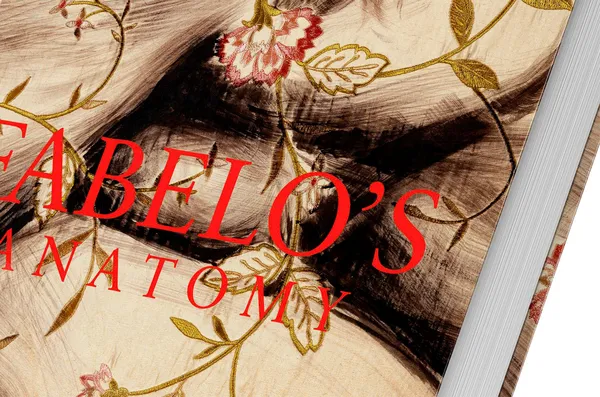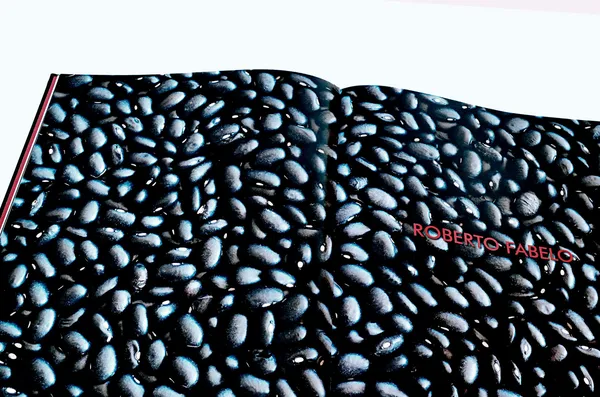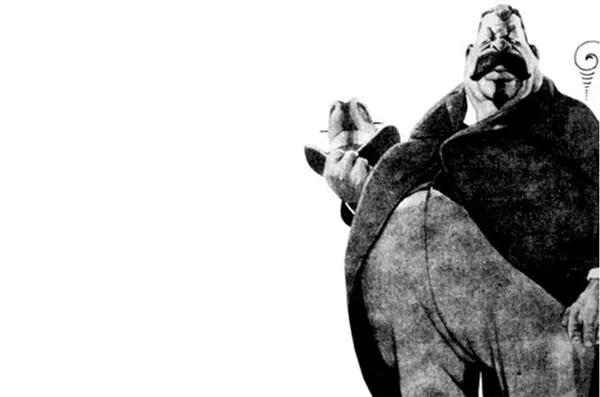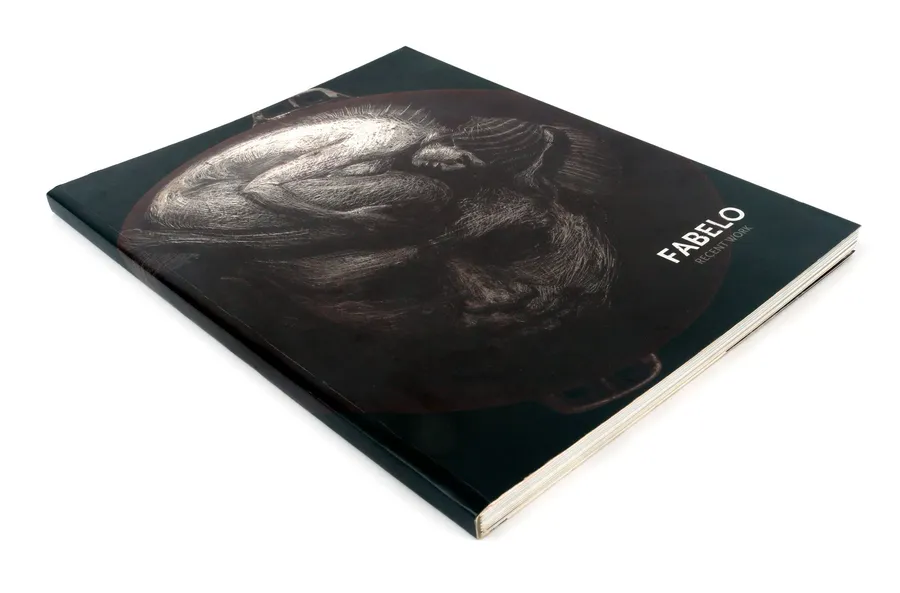
Couturier Gallery presented the first United States solo gallery exhibition of one of Cuba’s premier and most highly decorated contemporary artists, Roberto Fabelo (b. 1950, Camagüey, Cuba). The exhibition, Fabelo – New Work, featured paintings, drawings and sculpture by this multidisciplinary avant-garde artist, who honed his unique style and fertile imagination in Cuba’s post-revolutionary period. He is known internationally for his compelling allegorical repertoire of images, which includes robust figures, nautilus and bird accoutrements, Kafkaesque insects, cazuelas (cooking pots) and domestic tools, to cite a few. A hardbound color catalog accompanied the show, on view from September 13 to October 18, 2014.
Revered as a prolific painter, sculptor and illustrator, Fabelo draws on European masters such as Velázquez and Goya while retaining his Cuban identity, helping to launch a new Cuban aesthetic with a modern Western slant. Beneath his lavish creations and provocative themes lies an existential framework that speaks to his world consciousness and sociopolitical beliefs. Fabelo appears unapologetic in his depiction of these farcical compositions and wry observations, but the intended effect is not only to challenge the viewer but to champion the human condition through a surreal resolve.
Surface material has always been an important component of Fabelo’s work. He won an award at the first Havana Biennial in 1984 for Fragmentos vitales, a piece consisting of drawings on irregularly cut kraft paper glued directly to the wall — revolutionary in its approach. This kind of innovation helped define him as a leading figure of the Cuban avant-garde. Fabelo stands out as a master draftsman, as is evident in the design of his noteworthy sculptural works and in his recent sardonic anatomical drawings made on re-appropriated pages of anatomy textbooks. The interplay between image and text creates an oddly poetic narrative, suggesting a torn page from some distorted illuminated manuscript. Another example of his unique artistry is his three-dimensional reductive drawings on large, used, blackened metal pots, with heavily etched portraits that convey a sense of artistic alchemy.
Awards & Honors: National Prize for Visual Arts, Ministry of Culture, Havana, 2004; self-portrait in the permanent collection of the Galleria degli Uffizi, Florence, 2002; First Prize at the First Ibero-American Watercolor Biennial, Viña del Mar, Chile, and UNESCO Prize for the Promotion of the Arts, Paris, 1996; First Prize at the XI International Drawing Biennale, Cleveland, Great Britain, 1993; Armando Reverón International Drawing Prize at the First Havana Biennial, a prize at the Ninth Drawing Exhibition, Rijeka, Yugoslavia, and Intergraphik ’84 Drawing Award, Berlin, 1984; Acquisition Prize, III Triennial of Contemporary Art, New Delhi, India, 1978; and First Prize for Painting at the First National Exhibition of Art Professors and Instructors, Havana, 1973.
Principal Collections: Casa de las Américas, Havana, Cuba; Centro Wifredo Lam, Havana, Cuba; Fondo Cubano de Bienes Culturales, Havana, Cuba; Galería del Retrato Yugoslavo, Tuzla, Yugoslavia; Hotel Santiago, Santiago de Cuba, Cuba; Museo de Arte Moderno, New Delhi, India; Museo de Arte Moderno, Mexico City, Mexico; Museo Nacional de Bellas Artes, Havana, Cuba; Museo Universitario del Chopo, Mexico City, Mexico; Nordjyllands Kunstmuseum, Aalborg, Denmark; Taller Experimental de Gráfica (TEG), Havana, Cuba.